Buy bored.eu ?
We are moving the project
bored.eu .
Are you interested in purchasing the domain
bored.eu ?
domain@kv-gmbh.de · 0541-91531010
Buy bored.eu ?
Who is the economist?
An economist is a professional who studies and analyzes the production, distribution, and consumption of goods and services. They use economic theories and principles to provide insights into various aspects of the economy, such as employment, inflation, and economic growth. Economists also conduct research, develop forecasts, and provide recommendations to businesses, governments, and other organizations to help them make informed decisions about resource allocation and policy development. Overall, economists play a crucial role in understanding and shaping the economic landscape. **
What does an economist do?
An economist studies how societies allocate scarce resources to satisfy unlimited wants. They analyze data, trends, and economic indicators to understand and predict economic behavior. Economists also provide insights and recommendations to businesses, governments, and organizations to help them make informed decisions about resource allocation, production, and consumption. Their work can involve researching and analyzing economic issues, developing economic models, and providing economic forecasts and policy recommendations. **


Similar search terms for Economist
Top-Angebote
Products related to Economist:
-
Abacus The Undercover Economist by Tim Harford - Paperback - Popular Economics - Bestselling Non-Fiction Gift BookThe Undercover Economist by Tim Harford is a brand new paperback that turns everyday moments into vivid economics lessons. From a morning cappuccino at Waterloo Station to the housing ladder, Harford shows economics as the stuff of daily life, not distant theory. Written in clear, witty prose and free of jargon or equations, this book is ideal for curious readers, students, teachers, and anyone looking for a genuinely accessible introduction to how markets really work. In The Undercover Economist, Tim Harford asks the questions that ordinary life throws up and answers them with the tools of economic thinking. Who really profits from your morning coffee? Why does buying a house in a good area cost so much, and who benefits from that scarcity? Why do secondhand cars get such a bad reputation, and what does that reveal about information and trust in any market?7,99 £*Shipping: 2,99 £Secure redirect to the provider
-
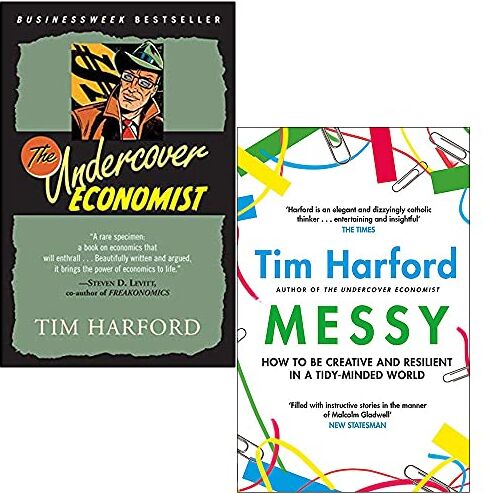
Random House Books The Undercover Economist & Messy How to Be Creative and Resilient By Tim Harford 2 Book setThe Undercover Economist & Messy How to Be Creative and Resilient in a Tidy-Minded World By Tim Harford 2 Books Collection Set: The Undercover Economist: "The economy [isn't] a bunch of rather dull statistics with names like GDP (gross domestic product)," notes Tim Harford, columnist and regular guest on NPR's Marketplace, "economics is about who gets what and why." In this acclaimed and riveting book-part exposé, part user's manual-the astute and entertaining columnist from the Financial Times demystifies the ways in which money works in the world. From why the coffee in your cup costs so much to why efficiency is not necessarily the answer to ensuring a fair society, from improving health care to curing crosstown traffic-all the dirty little secrets of dollars and cents are delightfully revealed by The Undercover Economist. Messy How to Be Creative and Resilient in a Tidy-Minded World: The urge to tidiness seems to be rooted deep in the human psyche. Many of us feel threatened by anything that is vague, unplanned, scattered around or hard to describe. We find comfort in having a script to rely on, a system to follow, in being able to categorise and file away.We all benefit from tidy organisation - up to a point. A large library needs a reference system. Global trade needs the shipping container. Scientific collaboration needs measurement units. But the forces of tidiness have marched too far. Corporate middle managers and government bureaucrats have long tended to insist that everything must have a label, a number and a logical place in a logical system.8,99 £*Shipping: 2,99 £Secure redirect to the provider
-
The Undercover Economist & Fifty Things That Made The Modern Economy 3-Book Set by Tim Harford - Non Fiction - PaperbackTitles in This Set:. The Undercover Economist. Fifty Things that Made the Modern Economy. The Undercover Economist Strikes Back: How to Run or Ruin an Economy Condition: BRAND NEW. Format: Paperback Overview:. Tim Harford’s three-book collection brings his clear, engaging economic storytelling into one essential paperback set. The Undercover Economist opens readers’ eyes to how everyday choices—whether we buy coffee, book flights, or decide where to live—are shaped by markets, incentives, and information, even when the inner workings aren’t obvious. Fifty Things that Made the Modern Economy curates fifty pivotal innovations and ideas that quietly power modern life, linking historical breakthroughs to current daily realities with vivid, accessible explanations. The Undercover Economist Strikes Back: How to Run or Ruin an Economy widens the lens to macro policy, discussing how rules, incentives, and institutions influence prices, growth, and prosperity in ways that affect us all. This trio forms a complete, education-friendly reading journey—from micro decisions to macro outcomes—perfect for curious readers seeking practical economics in plain language. It also makes a thoughtful gift for students, professionals, and book lovers who crave ideas that illuminate real-world behaviour and outcomes. What Makes This Collection Special:. What makes this Tim Harford collection stand out is the seamless progression from everyday economics to big-picture policy, all delivered with wit, clarity, and real-world examples. The Undercover Economist grounds readers in intuitive concepts using relatable scenarios, while Fifty Things highlights the extraordinary ideas and inventions that reshaped economies across centuries. The final volume, Strikes Back, translates those lessons into policy-minded thinking about how governments influence markets—without losing Harford’s engaging, readable voice. Together, the books offer a cohesive, binge-friendly reading arc that rewards careful readers with deeper insight into how incentives drive behaviour, how innovations alter opportunity, and how economic policy can steer or stumble. The set’s paperback format also makes it a practical, gift-ready collection for desks, shelves, or study spaces. Books Included in This Collection:. The Undercover Economist. In this foundational work, Harford peels back the curtain on everyday economy—explaining why prices, wages, and choices aren’t random but the result of countless incentives, information flows, and competitive pressures. Expect approachable case studies—from coffee shops to global trade—that reveal how markets shape daily life and the surprising forces that influence the cost of living. A smart, accessible introduction for new readers and a thoughtful reminder for seasoned economics fans that real-world outcomes follow from real-world decisions. Fifty Things that Made the Modern Economy. Harford takes readers on a guided tour through fifty pivotal innovations and ideas—from...99,99 £*Shipping: 0,00 £Secure redirect to the provider
-
Fifty Things That Made The Modern Economy, The Undercover Economist 3-Book Set by Tim Harford - Non Fiction - PaperbackTitles in This Set:. Messy. Fifty Things that Made the Modern Economy. The Undercover Economist Condition: BRAND NEW. Format: Paperback Overview:. Tim Harford Collection 3 Books Set brings together three essential explorations of how our everyday choices connect to big economic ideas. In Messy, Harford argues that creativity and resilience often flourish not in pristine order but where systems tolerate a healthy dose of disorder. He uses vivid examples from science, business, and daily life to show that tidy thinking can be valuable—up to a point—before it starts holding us back. Fifty Things that Made the Modern Economy surveys fifty pivotal inventions and ideas that quietly power modern life, from the most mundane conveniences to the grandest infrastructure, revealing how complex systems emerge from simple decisions. The Undercover Economist then turns macro concepts into accessible everyday moments—why prices differ, how markets allocate scarce resources, and what incentives really drive behaviour. Together, these three titles form a compelling, practical map of how the world works, crafted for curious readers who want to think more clearly and act more effectively in daily life. What Makes This Collection Special:. This trio is built for readers who crave big ideas delivered with warmth, wit, and clarity. Each book stands on its own, yet they converge into a cohesive reading journey: from embracing imperfect systems (Messy) to tracing the hidden architecture behind daily goods (Fifty Things) to decoding the price signals and incentives that govern everyday decisions (The Undercover Economist). The collection is ideal for lifelong learners, students exploring economics for the first time, professionals seeking sharper analysis, and gift buyers looking for a thoughtful, durable present. The consistent paperback format and authorial voice ensure a smooth transition from one title to the next, making it a convenient, binge-friendly set that deepens understanding with every page turn. Books Included in This Collection:. Messy. In Messy, Tim Harford challenges the world’s obsession with tidiness and perfection. He argues that progress often arises from embracing ambiguity, testing ideas, and building flexible systems. The book blends lively storytelling with practical frameworks—showing how non-linear thinking, iterative experiments, and resilient processes help individuals and organisations adapt to uncertainty. It’s a persuasive invitation to rethink planning, collaboration, and creativity in a way that feels achievable for teams, families, and solo problem-solvers alike. A fresh take for readers who want to cultivate a mindset that thrives on organised, purposeful mess rather than paralysis by neatness. Fifty Things that Made the Modern Economy. This engaging tour of fifty pivotal ideas and innovations reveals how seemingly small decisions become world-shaping forces. Harford unpack concepts behind everyday conveniences, infrastructure, and...99,99 £*Shipping: 0,00 £Secure redirect to the provider



-
Which qualification is of higher value: the certified business economist IHK or the state-certified business economist?
The value of a qualification depends on various factors such as the reputation of the issuing institution, the specific skills and knowledge gained, and the industry's recognition. In general, the certified business economist IHK may be considered of higher value as it is issued by the German Chamber of Industry and Commerce (IHK), which is a well-respected and recognized institution. However, the state-certified business economist may also hold significant value depending on the specific requirements and recognition within the industry or region. It is important to consider the specific skills and knowledge gained from each qualification and how they align with your career goals and industry standards. **
-
What entertainment and leisure activities did people in the Baroque era use?
During the Baroque era, people enjoyed various forms of entertainment and leisure activities. Some popular activities included attending theatrical performances, such as plays and operas, as well as musical concerts. Dancing, particularly in the form of elaborate court dances, was also a common pastime. Additionally, people in the Baroque era enjoyed participating in outdoor activities like hunting, horseback riding, and attending festivals and masquerade balls. Overall, the Baroque era offered a wide range of entertainment options for people of different social classes and interests. **
-
Has anyone completed the business economist qualification?
As an AI, I do not have real-time information on specific individuals completing qualifications. However, the business economist qualification is a recognized certification that many professionals in the field of economics and business may pursue to enhance their skills and credentials. It is likely that there are individuals who have completed this qualification, but specific information on who has completed it may not be readily available. **
-
What does a graduate social economist do?
A graduate social economist typically works in various sectors such as government agencies, non-profit organizations, research institutions, or private companies. They analyze social issues and economic trends to develop policies and strategies that promote social welfare and economic development. They may conduct research, collect and analyze data, and provide recommendations to address social inequalities, poverty, unemployment, and other economic challenges. Additionally, they may work on projects related to sustainable development, social justice, and public policy. **


What experiences does a financial economist have?
A financial economist typically has experiences in analyzing financial data, conducting economic research, and making forecasts and predictions about financial markets and economic trends. They also have experience in developing and implementing financial models to evaluate investment opportunities, assess risk, and optimize financial decision-making. Additionally, financial economists often have experience in advising businesses and organizations on financial strategies, as well as in teaching and communicating complex financial concepts to a wide range of audiences. **
What is the salary of an economist?
The salary of an economist can vary widely depending on factors such as education, experience, location, and the specific industry or organization they work for. According to the U.S. Bureau of Labor Statistics, the median annual wage for economists was $108,350 in May 2020. Economists working in the federal government tend to earn higher salaries, while those in research and development in the physical, engineering, and life sciences typically earn lower salaries. Overall, economists have the potential to earn a competitive salary, especially with advanced degrees and experience in the field. **
Top-Angebote
Products related to Economist:
-
Random House Books The Undercover Economist by Tim Harford"The economy [isn't] a bunch of rather dull statistics with names like GDP (gross domestic product)," notes Tim Harford, columnist and regular guest on NPR's Marketplace, "economics is about who gets what and why." In this acclaimed and riveting book-part exposé, part user's manual-the astute and entertaining columnist from the Financial Times demystifies the ways in which money works in the world. From why the coffee in your cup costs so much to why efficiency is not necessarily the answer to ensuring a fair society, from improving health care to curing crosstown traffic-all the dirty little secrets of dollars and cents are delightfully revealed by The Undercover Economist.4,99 £*Shipping: 1,99 £Secure redirect to the provider
-
Tim Harford 3 Books Collection Set (Undercover Economist, Fifty Things, Strikes) - Non Fiction - PaperbackTitles in This Set:. The Undercover Economist. Fifty Things that Made the Modern Economy. The Undercover Economist Strikes Back: How to Run or Ruin an Economy Condition: BRAND NEW. Format: Paperback Overview:. This Tim Harford three-book collection brings together accessible, thought-provoking explorations of how economics shapes everyday life, technology, and public policy. The Undercover Economist invites readers to see the hidden forces guiding purchases, markets, and decision-making in a lively, engaging voice. Fifty Things that Made the Modern Economy surveys fifty pivotal innovations and ideas that quietly—but profoundly—shaped the world we live in today. The Undercover Economist Strikes Back: How to Run or Ruin an Economy offers clear, practical insight into macro policy and economic thinking, explaining what works, what doesn’t, and why. In paperback, the set is ideal for curious readers seeking a cohesive, readable primer on economic thinking, with a consistent voice across titles that makes the whole reading journey feel natural and rewarding. A thoughtful gift for students, professionals, and lifelong learners alike. What Makes This Collection Special:. This trio is built for readers who want to move from theory to real-world application with ease. Harford’s signature approach—friendly, witty, and rigorously grounded—lets you track how incentives, trade-offs, and global forces influence daily life, from coffee prices to policy choices. The first two titles build foundational intuition by unpacking concepts through relatable examples, while the Strikes Back volume ties the ideas together with accessible explanations of how economies run in practice. Together, they form a complete, binge-worthy reading journey that deepens economic literacy, sparks discussion, and equips you to spot the economics behind everyday events. Books Included in This Collection:. The Undercover Economist. This cornerstone work peels back the curtain on how markets shape common decisions—food, travel, and even politics—through clear anecdotes and practical insight. Harford shows that understanding incentives changes the way you view everyday life, making complex ideas feel tangible. A smart, readable entry point for readers who want to see the invisible hand at work in plain terms, with real-world examples that stay with you long after you finish the last page. Fifty Things that Made the Modern Economy. A tour through fifty pivotal inventions, systems, and ideas that quietly propelled modern life forward. Each short chapter examines a invention or concept—ranging from the barcode to the internet—that transformed how we work, trade, and interact. The collection’s breadth makes it perfect for readers who enjoy quick, enlightening doses of history and economics, while the depth behind each entry reveals the surprising connections between seemingly ordinary innovations and today’s global society. The Undercover Economist Strikes Back: How to Run or Ruin an Economy....99,99 £*Shipping: 0,00 £Secure redirect to the provider
-
Abacus The Undercover Economist by Tim Harford - Paperback - Popular Economics - Bestselling Non-Fiction Gift BookThe Undercover Economist by Tim Harford is a brand new paperback that turns everyday moments into vivid economics lessons. From a morning cappuccino at Waterloo Station to the housing ladder, Harford shows economics as the stuff of daily life, not distant theory. Written in clear, witty prose and free of jargon or equations, this book is ideal for curious readers, students, teachers, and anyone looking for a genuinely accessible introduction to how markets really work. In The Undercover Economist, Tim Harford asks the questions that ordinary life throws up and answers them with the tools of economic thinking. Who really profits from your morning coffee? Why does buying a house in a good area cost so much, and who benefits from that scarcity? Why do secondhand cars get such a bad reputation, and what does that reveal about information and trust in any market?7,99 £*Shipping: 2,99 £Secure redirect to the provider
-
Random House Books The Undercover Economist & Messy How to Be Creative and Resilient By Tim Harford 2 Book setThe Undercover Economist & Messy How to Be Creative and Resilient in a Tidy-Minded World By Tim Harford 2 Books Collection Set: The Undercover Economist: "The economy [isn't] a bunch of rather dull statistics with names like GDP (gross domestic product)," notes Tim Harford, columnist and regular guest on NPR's Marketplace, "economics is about who gets what and why." In this acclaimed and riveting book-part exposé, part user's manual-the astute and entertaining columnist from the Financial Times demystifies the ways in which money works in the world. From why the coffee in your cup costs so much to why efficiency is not necessarily the answer to ensuring a fair society, from improving health care to curing crosstown traffic-all the dirty little secrets of dollars and cents are delightfully revealed by The Undercover Economist. Messy How to Be Creative and Resilient in a Tidy-Minded World: The urge to tidiness seems to be rooted deep in the human psyche. Many of us feel threatened by anything that is vague, unplanned, scattered around or hard to describe. We find comfort in having a script to rely on, a system to follow, in being able to categorise and file away.We all benefit from tidy organisation - up to a point. A large library needs a reference system. Global trade needs the shipping container. Scientific collaboration needs measurement units. But the forces of tidiness have marched too far. Corporate middle managers and government bureaucrats have long tended to insist that everything must have a label, a number and a logical place in a logical system.8,99 £*Shipping: 2,99 £Secure redirect to the provider
-
Who is the economist?
An economist is a professional who studies and analyzes the production, distribution, and consumption of goods and services. They use economic theories and principles to provide insights into various aspects of the economy, such as employment, inflation, and economic growth. Economists also conduct research, develop forecasts, and provide recommendations to businesses, governments, and other organizations to help them make informed decisions about resource allocation and policy development. Overall, economists play a crucial role in understanding and shaping the economic landscape. **
-
What does an economist do?
An economist studies how societies allocate scarce resources to satisfy unlimited wants. They analyze data, trends, and economic indicators to understand and predict economic behavior. Economists also provide insights and recommendations to businesses, governments, and organizations to help them make informed decisions about resource allocation, production, and consumption. Their work can involve researching and analyzing economic issues, developing economic models, and providing economic forecasts and policy recommendations. **
-
Which qualification is of higher value: the certified business economist IHK or the state-certified business economist?
The value of a qualification depends on various factors such as the reputation of the issuing institution, the specific skills and knowledge gained, and the industry's recognition. In general, the certified business economist IHK may be considered of higher value as it is issued by the German Chamber of Industry and Commerce (IHK), which is a well-respected and recognized institution. However, the state-certified business economist may also hold significant value depending on the specific requirements and recognition within the industry or region. It is important to consider the specific skills and knowledge gained from each qualification and how they align with your career goals and industry standards. **
-
What entertainment and leisure activities did people in the Baroque era use?
During the Baroque era, people enjoyed various forms of entertainment and leisure activities. Some popular activities included attending theatrical performances, such as plays and operas, as well as musical concerts. Dancing, particularly in the form of elaborate court dances, was also a common pastime. Additionally, people in the Baroque era enjoyed participating in outdoor activities like hunting, horseback riding, and attending festivals and masquerade balls. Overall, the Baroque era offered a wide range of entertainment options for people of different social classes and interests. **
Similar search terms for Economist
-
The Undercover Economist & Fifty Things That Made The Modern Economy 3-Book Set by Tim Harford - Non Fiction - PaperbackTitles in This Set:. The Undercover Economist. Fifty Things that Made the Modern Economy. The Undercover Economist Strikes Back: How to Run or Ruin an Economy Condition: BRAND NEW. Format: Paperback Overview:. Tim Harford’s three-book collection brings his clear, engaging economic storytelling into one essential paperback set. The Undercover Economist opens readers’ eyes to how everyday choices—whether we buy coffee, book flights, or decide where to live—are shaped by markets, incentives, and information, even when the inner workings aren’t obvious. Fifty Things that Made the Modern Economy curates fifty pivotal innovations and ideas that quietly power modern life, linking historical breakthroughs to current daily realities with vivid, accessible explanations. The Undercover Economist Strikes Back: How to Run or Ruin an Economy widens the lens to macro policy, discussing how rules, incentives, and institutions influence prices, growth, and prosperity in ways that affect us all. This trio forms a complete, education-friendly reading journey—from micro decisions to macro outcomes—perfect for curious readers seeking practical economics in plain language. It also makes a thoughtful gift for students, professionals, and book lovers who crave ideas that illuminate real-world behaviour and outcomes. What Makes This Collection Special:. What makes this Tim Harford collection stand out is the seamless progression from everyday economics to big-picture policy, all delivered with wit, clarity, and real-world examples. The Undercover Economist grounds readers in intuitive concepts using relatable scenarios, while Fifty Things highlights the extraordinary ideas and inventions that reshaped economies across centuries. The final volume, Strikes Back, translates those lessons into policy-minded thinking about how governments influence markets—without losing Harford’s engaging, readable voice. Together, the books offer a cohesive, binge-friendly reading arc that rewards careful readers with deeper insight into how incentives drive behaviour, how innovations alter opportunity, and how economic policy can steer or stumble. The set’s paperback format also makes it a practical, gift-ready collection for desks, shelves, or study spaces. Books Included in This Collection:. The Undercover Economist. In this foundational work, Harford peels back the curtain on everyday economy—explaining why prices, wages, and choices aren’t random but the result of countless incentives, information flows, and competitive pressures. Expect approachable case studies—from coffee shops to global trade—that reveal how markets shape daily life and the surprising forces that influence the cost of living. A smart, accessible introduction for new readers and a thoughtful reminder for seasoned economics fans that real-world outcomes follow from real-world decisions. Fifty Things that Made the Modern Economy. Harford takes readers on a guided tour through fifty pivotal innovations and ideas—from...99,99 £*Shipping: 0,00 £Secure redirect to the provider
-
Fifty Things That Made The Modern Economy, The Undercover Economist 3-Book Set by Tim Harford - Non Fiction - PaperbackTitles in This Set:. Messy. Fifty Things that Made the Modern Economy. The Undercover Economist Condition: BRAND NEW. Format: Paperback Overview:. Tim Harford Collection 3 Books Set brings together three essential explorations of how our everyday choices connect to big economic ideas. In Messy, Harford argues that creativity and resilience often flourish not in pristine order but where systems tolerate a healthy dose of disorder. He uses vivid examples from science, business, and daily life to show that tidy thinking can be valuable—up to a point—before it starts holding us back. Fifty Things that Made the Modern Economy surveys fifty pivotal inventions and ideas that quietly power modern life, from the most mundane conveniences to the grandest infrastructure, revealing how complex systems emerge from simple decisions. The Undercover Economist then turns macro concepts into accessible everyday moments—why prices differ, how markets allocate scarce resources, and what incentives really drive behaviour. Together, these three titles form a compelling, practical map of how the world works, crafted for curious readers who want to think more clearly and act more effectively in daily life. What Makes This Collection Special:. This trio is built for readers who crave big ideas delivered with warmth, wit, and clarity. Each book stands on its own, yet they converge into a cohesive reading journey: from embracing imperfect systems (Messy) to tracing the hidden architecture behind daily goods (Fifty Things) to decoding the price signals and incentives that govern everyday decisions (The Undercover Economist). The collection is ideal for lifelong learners, students exploring economics for the first time, professionals seeking sharper analysis, and gift buyers looking for a thoughtful, durable present. The consistent paperback format and authorial voice ensure a smooth transition from one title to the next, making it a convenient, binge-friendly set that deepens understanding with every page turn. Books Included in This Collection:. Messy. In Messy, Tim Harford challenges the world’s obsession with tidiness and perfection. He argues that progress often arises from embracing ambiguity, testing ideas, and building flexible systems. The book blends lively storytelling with practical frameworks—showing how non-linear thinking, iterative experiments, and resilient processes help individuals and organisations adapt to uncertainty. It’s a persuasive invitation to rethink planning, collaboration, and creativity in a way that feels achievable for teams, families, and solo problem-solvers alike. A fresh take for readers who want to cultivate a mindset that thrives on organised, purposeful mess rather than paralysis by neatness. Fifty Things that Made the Modern Economy. This engaging tour of fifty pivotal ideas and innovations reveals how seemingly small decisions become world-shaping forces. Harford unpack concepts behind everyday conveniences, infrastructure, and...99,99 £*Shipping: 0,00 £Secure redirect to the provider
-
The Undercover Economist & Fifty Things That Made The Modern Economy 2 Books Collection Set by Tim Harford - Non Fiction - PaperbackTitles in This Set:. The Undercover Economist. Fifty Things that Made the Modern Economy Condition: BRAND NEW. Format: Paperback Overview:. Tim Harford’s two-book collection brings together his acclaimed, accessible approach to economics: a sharp look at how markets shape everyday life and a broader tour of the ideas that propelled the modern economy. The Undercover Economist unlocks the hidden forces behind ordinary purchases and choices—wondering why coffee at Waterloo Station costs what it does, why the property ladder feels so unreachable, and how incentives influence immigration and policy. It translates abstract theory into vivid, memorable stories that illuminate what drives price, risk, and opportunity in real-world markets. Paired with Fifty Things that Made the Modern Economy, readers gain a sweeping, engaging itinerary through fifty pivotal inventions and ideas—from money to the spreadsheet—that quietly rewired wealth, productivity, and daily life. This paperback collection is perfect for curious minds seeking clear explanations, practical insights, and a trustworthy guide to how the economy actually works. A thoughtful gift for graduates, professionals, students, and any reader who loves well-structured non-fiction. What Makes This Collection Special:. Though each book stands on its own, together they form a cohesive reading journey from micro decisions to macro transformations. The Undercover Economist teaches you to spot how price signals, incentives, and competition shape everyday choices, turning ordinary experiences into economics case studies. Fifty Things that Made the Modern Economy then widens the lens, revealing how fifty big ideas and innovations—currency, measurement, transport, data, and finance among them—created the modern wealth machine. The pair complements by offering both practical thinking tools and historical context, helping readers connect daily habits with global progress. The result is a standout, binge-friendly set that deepens financial literacy, sharpens critical thinking, and fuels informed discussion—perfect for study, gifting, or personal enrichment. Books Included in This Collection:. The Undercover Economist. Step into the everyday economics of cities, markets, and policy with Tim Harford’s accessible, engaging guide. This book unpackss how seemingly simple choices—where to buy coffee, how housing prices are shaped, why immigration policies work the way they do—are driven by incentives and hidden costs. Written in crisp, witty prose, it translates complex concepts into memorable scenarios you’ll recognize from daily life. It’s an ideal entry point for anyone curious about economics, as well as a refreshing refresher for readers who want to see theory in action in streets, stores, and boardrooms. Books Included in This Collection:. Fifty Things that Made the Modern Economy. This brisk, readable tour collects fifty influential inventions and ideas that quietly powered modern wealth and progress. Harford...99,99 £*Shipping: 0,00 £Secure redirect to the provider
-
The Undercover Economist & Fifty Things That Made the Modern Economy 3 Books Collection Set by Tim Harford - Non Fiction - PaperbackTitles in This Set:. The Undercover Economist. Fifty Things that Made the Modern Economy. The Undercover Economist Strikes Back: How to Run or Ruin an Economy Condition: BRAND NEW. Format: Paperback Overview:. Immerse yourself in Tim Harford's practical, witty approach to economics with this carefully curated three-book collection. The Undercover Economist reveals how everyday choices—where we shop, what we pay, and how markets allocate scarce resources—are shaped by incentives and information. Fifty Things that Made the Modern Economy surveys fifty pivotal innovations that quietly redefined what we can do, from the invention of money to the rise of the internet, each explained with engaging examples. The Undercover Economist Strikes Back expands the conversation to policy and macro forces, showing how governments, businesses, and individuals can influence outcomes in real-world economies. This paperback set is ideal for curious readers seeking accessible, evidence-based insights into how the world works, students needing a friendly introduction to economic thinking, professionals wanting fresh perspectives, and gift buyers looking for a thoughtful, compact collection. Ordering the set delivers a cohesive reading journey, added value through bundled savings, and a stylish, compact way to own three cornerstone works by one acclaimed author. What Makes This Collection Special:. Together, these books map a complete arc of economic thought in Harford's engaging voice. The Undercover Economist offers on-the-ground intuition about markets, while Fifty Things celebrates the human ingenuity behind everyday conveniences. The Strikes Back ties the pieces into policy, macro trends, and real-world decision-making. Readers can move from micro-level decisions to macro outcomes, building a practical mental model you can apply at work, in study, or at the kitchen table. The set also makes a fantastic gift: a compact, premium package that looks thoughtful and cohesive, with a design that signals a unified learning journey. For fans of accessible non-fiction, this collection provides a reliable, memorable introduction to how economics touches every aspect of modern life. Books Included in This Collection:. The Undercover Economist. First published in the mid-2000s, The Undercover Economist pulls back the curtain on everyday prices and choices. Harford shows how retailers price goods, how competition shapes our options, and why information matters for market efficiency. With crisp anecdotes and accessible explanations, the book translates abstract theory into practical insight—helping readers notice the economic forces at work in coffee shops, supermarkets, and global trade. It’s a perfect entry point to Harford’s thinking and a reliable foundation for the rest of the collection. Books Included in This Collection:. Fifty Things that Made the Modern Economy. Fifty Things that Made the Modern Economy collects fifty compact essays about innovations that quietly...99,99 £*Shipping: 0,00 £Secure redirect to the provider
-
Has anyone completed the business economist qualification?
As an AI, I do not have real-time information on specific individuals completing qualifications. However, the business economist qualification is a recognized certification that many professionals in the field of economics and business may pursue to enhance their skills and credentials. It is likely that there are individuals who have completed this qualification, but specific information on who has completed it may not be readily available. **
-
What does a graduate social economist do?
A graduate social economist typically works in various sectors such as government agencies, non-profit organizations, research institutions, or private companies. They analyze social issues and economic trends to develop policies and strategies that promote social welfare and economic development. They may conduct research, collect and analyze data, and provide recommendations to address social inequalities, poverty, unemployment, and other economic challenges. Additionally, they may work on projects related to sustainable development, social justice, and public policy. **
-
What experiences does a financial economist have?
A financial economist typically has experiences in analyzing financial data, conducting economic research, and making forecasts and predictions about financial markets and economic trends. They also have experience in developing and implementing financial models to evaluate investment opportunities, assess risk, and optimize financial decision-making. Additionally, financial economists often have experience in advising businesses and organizations on financial strategies, as well as in teaching and communicating complex financial concepts to a wide range of audiences. **
-
What is the salary of an economist?
The salary of an economist can vary widely depending on factors such as education, experience, location, and the specific industry or organization they work for. According to the U.S. Bureau of Labor Statistics, the median annual wage for economists was $108,350 in May 2020. Economists working in the federal government tend to earn higher salaries, while those in research and development in the physical, engineering, and life sciences typically earn lower salaries. Overall, economists have the potential to earn a competitive salary, especially with advanced degrees and experience in the field. **
* All prices are inclusive of VAT and, if applicable, plus shipping costs. The offer information is based on the details provided by the respective shop and is updated through automated processes. Real-time updates do not occur, so deviations can occur in individual cases. ** Note: Parts of this content were created by AI.